
Guide
How to Design a Collection Strategy
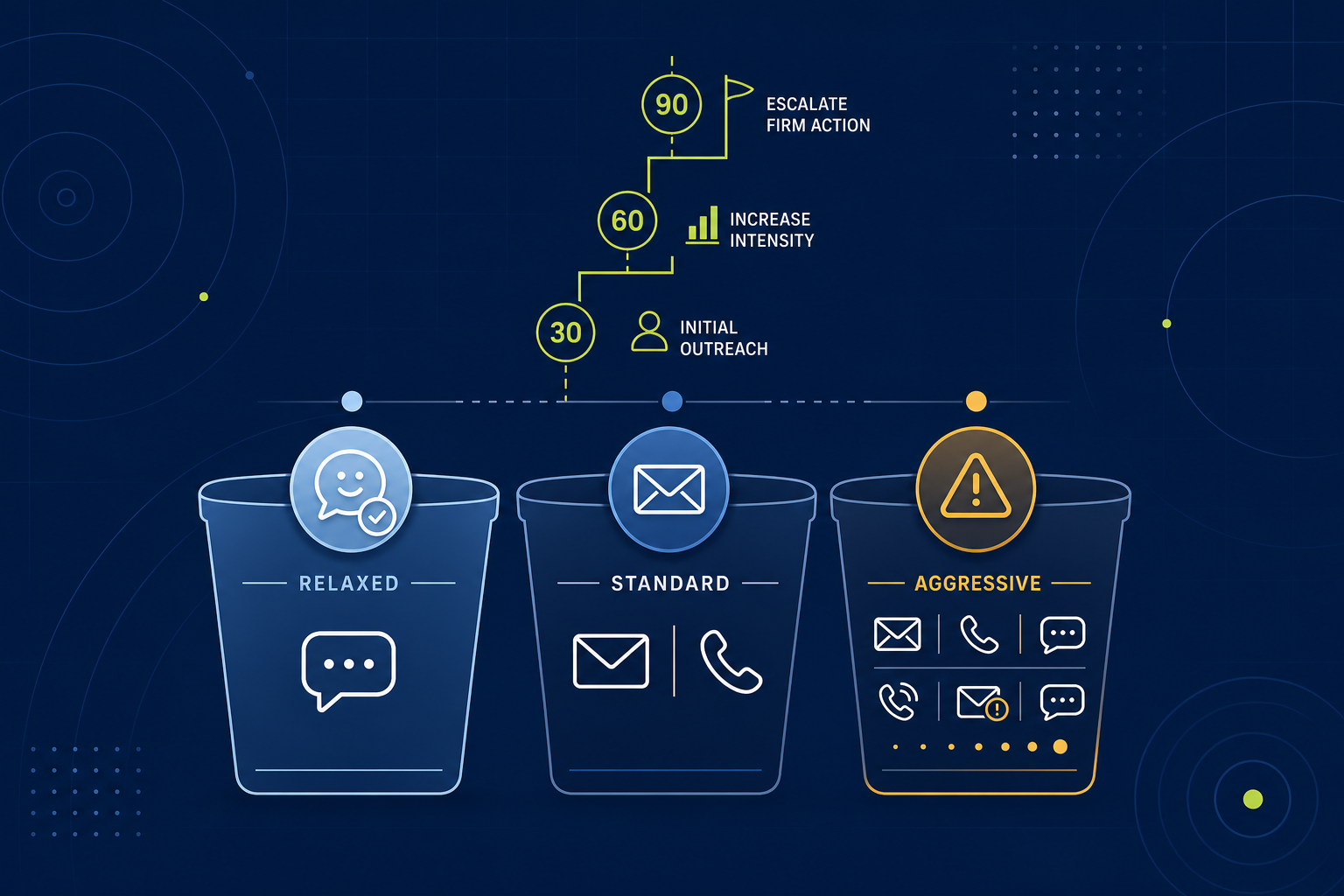
"Collections strategy" sounds like it should mean something complicated. It's really two decisions, made in advance instead of in the moment: which bucket an account goes into, and what happens if they still don't pay.
Get both decisions made ahead of time, and every past-due invoice has an obvious next step. Leave them undecided, and every account becomes a judgment call made under time pressure, by whoever happens to pick up the account that day.
Start With Buckets, Not Individual Accounts
Not every past-due account deserves the same response. A reliable customer riding out a slow month and a chronically late payer showing every sign of real trouble shouldn't get the same phone call, at the same frequency, in the same tone. The fix is grouping customers into a small number of collection buckets before anyone's late, tied to the risk grade you've already assigned them. NACM frames this kind of segmentation as a risk-mitigation tool that lets credit teams intervene before minor issues turn into real losses.
Three buckets cover most of it:
Relaxed. For your best, most trusted, or strategic accounts. No escalation, no threats, ever. Contact is light and genuinely friendly, more of a check-in than a collection attempt.
Standard. For everyone else in the normal range. Contact starts around once a week early in the aging cycle, increases to two or three times a week past 14 days, and climbs to three times a week past 60. Mostly email early on, with more phone calls mixed in as the balance ages.
Aggressive. For high-risk accounts. Reminders start before the invoice is even due, and contact runs two to three times a week, by phone and email, consistently from the due date forward.
Which bucket an account starts in should mostly come from the same risk grade used to set its credit limit in the first place, with room for a manual override on accounts that matter strategically regardless of grade. A low-risk account earns the light touch. A high-risk one earns the close watch, before there's ever a reason to collect on it.
The Escalation Policy Sits on Top of the Buckets
Contact frequency is one lever. The other is what actually happens if payment doesn't come. That's the escalation policy, and it applies to the standard and aggressive buckets, not the relaxed one, since staying out of formal escalation is the whole point of a relaxed relationship.
A workable structure ties real consequences to three thresholds:
30 days beyond terms: a credit hold. New orders pause until the account is current.
60 days beyond terms: a warning about derogatory marks on the account's credit bureau file.
90 days beyond terms: a warning that the account is being prepared for external involvement, legal action or a collection agency.
The mechanism worth understanding: it's usually the threat of the next step, not the step itself, that gets a customer to act. That only works if the threat is real. If you're not actually planning to report to a bureau today, don't imply it's already happening; language like "we will begin preparing your account for bureau reporting in 14 days" is both honest and still does the job. NACM's own guidance on collections is explicit that threatening or harassing language a company doesn't intend to follow through on creates real liability and reputational risk, so the credibility of the threat has to come from a real, willing-to-execute process, not from bluffing.
The cadence that makes each threshold land: warn the customer 14 days before it happens, tell them clearly when it does, and spend the following 14 days reminding them what happened and exactly what resolves it.
When a Payment Plan Beats Continued Escalation
Not every past-due account should be pushed toward "pay the full balance now or else." Somewhere around the 30-day mark, for accounts engaging in good faith, it's often worth shifting the conversation from collecting the whole balance to negotiating a payment arrangement both sides can live with.
The signal to make that shift isn't the dollar amount. It's whether the customer is responsive, has offered a plausible reason for the delay, and is showing genuine intent to pay. An account that's gone quiet and stopped responding should keep climbing the escalation ladder. One that's picking up the phone and asking for terms is usually a better candidate for a structured plan than for a credit hold.
Treat the plan as an alternative track, not a reset button. If the customer misses the arrangement, the account should pick back up wherever the escalation policy left off, not start over from day one.